
"British culture"
700 article(s) found

The spread of coffee The cultural history of coffee
Africa is believed to be the home of coffee. But coffee actually originated in Ethiopia and was spread all over the world through the port of Mocha in Yemen. Ethiopian coffee cultivation began in 575 AD, for those Arabs, coffee was like the silk of China at that time, belonging to the national treasure. If anyone has the honor of tasting

Authentic Hot Tea, HK Style's recipe and production steps to share authentic Hot Tea, HK Style is it bitter?
From classic English tea to recipes from India, Thailand, Japan and other countries, milk tea, which is widely understood as tea with milk, has been adopted and transformed by countries all over the world. Hong Kong milk tea is a unique milk tea, which is based on black tea and seasoned with light milk or condensed milk. About Hong Kong milk tea Hong Kong milk tea represents the integration of Hong Kong and British tea culture. English people drink tea with milk.

A brief introduction to the history and culture of the origin and development of boutique coffee beans in Berman Manor
Kenya is bordered to the north by Ethiopia, the origin of Arabica coffee trees, but it was not until the beginning of the 20th century that coffee cultivation began. In the 19th century, missionaries introduced Arabica trees from Yemen, but did not plant them in large quantities. It was not until 1893 that coffee was cultivated on a large scale after the introduction of Brazil's ancient bourbon seeds. That is to say, Kenyan coffee was of Brazilian origin.

The History of the spread of Fine Coffee Culture and Common sense Coffee (2)
The first European description of coffee in 1573 was through German doctors staying in Syria. In the second half of the 16th century, the European people who traveled on the east coast of the land gradually spread. The British East India Company was established in 1660 and the East India Company was established in the Netherlands in 1602. The East India Company refers to the trade between Asia and Europe, South Asia and the East in the 17th and 19th centuries.

The History of the spread of Fine Coffee Culture and Common sense Coffee (2)
The first European description of coffee in 1573 was through German doctors staying in Syria. In the second half of the 16th century, the European people who traveled on the east coast of the land gradually spread. The British East India Company was established in 1660 and the East India Company was established in the Netherlands in 1602. The East India Company refers to the trade between Asia and Europe, South Asia and the East in the 17th and 19th centuries.

Qinbang Coffee is vigorously promoted to the British and Swiss markets
According to a report in Myanmar's Myanmar Mirror on July 12, coffee produced by Minde and Gamboli in Chin State (southern) has recently held promotion meetings for coffee lovers in Britain and Switzerland. Myanmar embassies and consulates in relevant countries attended the promotion meeting. Two owners from Switzerland held promotions in the UK and Switzerland on June 21 and July 6, respectively. The coffee of Qinbang is famous for its beautiful world.

European Men's Coffee complex
The word coffee comes from the Greek word Kaweh, which means strength and enthusiasm. Drinking coffee is not only a pastime, its rich cultural connotation is a pursuit of an ideal way of life. Men love coffee because it is as powerful as a man without losing its gentle and dignified temperament. Men once loved coffee and ignored the women around them, causing British women in the 17th century to collectively petition for coffee.

Kenya coffee development culture When did Kenya coffee enter China
Kenyan coffee gained further fame with the Hollywood blockbuster Out of Africa. In the film Merrill. Mary Streep plays Karen, a writer and coffee plantation owner. Many people probably remember the breathtaking views and magnificent sunsets from the film, but what is even more memorable is Karen's desire to have a coffee in Africa.

History of Coffee Culture Development Chronicle of Coffee Development
Memorabilia of the 6th century took place in the Abyssinia Plateau, when a shepherd named Caldai drove goats to the new prairie for grazing, and accidentally found coffee fruit because the goats ate a plant by mistake. At the beginning of the 10th century, Dr. Daggers, a famous doctor in Iraq, admitted and documented the pharmacological effects of coffee. This is one of the earliest valuable medical records of coffee.

A Chronicle of Coffee Development History of Coffee Culture
Memorabilia of the 6th century took place in the Abyssinia Plateau, when a shepherd named Caldai drove goats to the new prairie for grazing, and accidentally found coffee fruit because the goats ate a plant by mistake. At the beginning of the 10th century, Dr. Daggers, a famous doctor in Iraq, admitted and documented the pharmacological effects of coffee. This is one of the earliest valuable medical records of coffee.

General knowledge of Fine Coffee Culture Chronicle of Coffee Development History
Memorabilia of the 6th century took place in the Abyssinia Plateau, when a shepherd named Caldai drove goats to the new prairie for grazing, and accidentally found coffee fruit because the goats ate a plant by mistake. At the beginning of the 10th century, Dr. Daggers, a famous doctor in Iraq, admitted and documented the pharmacological effects of coffee. This is one of the earliest valuable medical records of coffee.
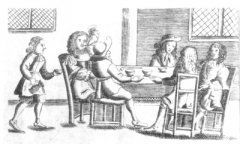
Coffee's Historical and Cultural Significance: Eastern Beverage, Western Culture
Coffee, a familiar but mysterious drink, blows into our world like a strong wind from the west and gradually changes our lives and temperaments.
History of Constantinople Cafe
According to the Turkish historian Pechevi Ibrahim I in 1635, it was not until 1554, during the reign of Suleiman I, that coffee houses first appeared. Two Syria each opened a coffee house in Constantinople, near the noisy market near the port and Pasa Mosque. Clean mats and blankets are laid out and are cheap. The Turks are fast.

A brief introduction to the history and culture of the origin and development of coffee beans in Kenya
This coffee has an excellent medium purity, crisp and refreshing taste. It has a fresh flavor and is most suitable for drinking iced coffee in summer. When tasting this coffee, if it is paired with sour fruits such as grapefruit, it will certainly give me the best coffee experience. Kenya is bordered to the north by Ethiopia, the origin of Arabica coffee trees, but it was not until the early 20th century that it began to engage in coffee cultivation.

Historical Development of Coffee Culture-Historical Development of semi-automatic Coffee Machine
The Historical Development of Coffee Culture-the Historical Development of semi-automatic Coffee machines Europeans first came into contact with coffee around 1515-1519, but were not interested in it for a long time. In 1585, 30 years after the emergence of the cafe in Istanbul, the Vatican's envoy to the area, Morosinny, reported that these people were all humble, tacky and unenterprising.

Coffee Culture History Coffee History Chronicle
Coffee fruit was found in Ethiopia in the 6th and 7th centuries; Rhazes, a famous doctor in the Arab region in the 10th century, was considered to be the first person in history to record coffee in the literature; 1100 yuan, the first recorded coffee trees were planted in the Arabian Peninsula, after roasting and cooking, coffee was called Gahwa, meaning Islamic wine; in the 13th century, people

Where does Taiwan tea come from? What tea does Taiwan tea belong to? What is the difference between Taiwan tea and Western tea?
Over the past few years, London has seen a wave of Taiwanese fever, from bubble tea and chicken cakes in the early days to eating a salty, tender Taiwanese bun at a minimalist BAO, which has become a "fashionable" thing for many Londoners. BAO was founded in 2012 by three young people, Shing and Ting, who are British Hong Kong nationals, and Erchen, who is from Taiwan.
Century-old CAFFE PASCUCCI founded Commonweal Coffee Salon
Like Chinese tea culture, coffee as a global consumer drink also contains rich history and connotation. British rigor, French gaudy and American coffee are all telling the charm of coffee with the culture of their respective countries. Compared with others, espresso, as a coffee representative with a long history, often reflects the taste and connotation of a coffee lover. One comes from

History of Cafe Development Constantinople
According to the 1635 records of the Turkish historian Patchev Ibrahim I, it was not until 1554, during the reign of Suleiman I, that the coffee shop first appeared, and the two Syrians each opened a coffee shop in Constantinople. It is located near the noisy market near the port and the Passa mosque. The museum is equipped with clean mats and blankets, and the charge is very cheap. The Turks are quick.

Chinese coffee has nothing to do with the coffee itself.
As can be seen from the Wechat index, since